

In the summer of 2020, the world watched in horror as Minneapolis police officer Derek Chauvin knelt on George Floyd’s neck for over nine minutes, leading to his death. This act of police brutality sparked global protests against systemic racism and unchecked violence by law enforcement. Floyd’s final words, “I can’t breathe,” became a rallying cry for justice. But what if this scene wasn’t isolated to a street corner? What if it were amplified to an entire population, with military might replacing a single officer’s knee? This is the core argument framing the ongoing crisis in Palestine: it’s not just a conflict or war, but a scaled-up version of police brutality, culminating in genocide. And in this analogy, the United States plays the role of “backup”; the institutional force that shields the perpetrator and prevents intervention.
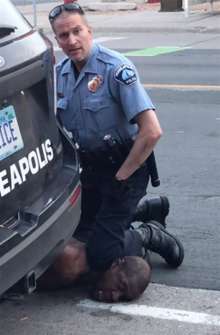
The Core Argument: From Street-Level Control to State-Level Domination
At its heart, this perspective views Israel’s actions in Palestine as an extension of the same dynamics seen in police brutality cases like George Floyd’s. On the streets of American cities, police often exert control over marginalized communities, predominantly black and brown populations, through disproportionate force, justified under the guise of maintaining “law and order.” In Palestine, this is escalated: the Israeli state, through its illegal military occupation, polices a stateless population in Gaza and the West Bank, who live without equal rights or citizenship. It’s not a battle between equals or sovereign armies; it’s a dominant power enforcing control over a subjugated group, much like a cop patrolling a neighborhood deemed “high-risk.”
This scaling transforms individual acts of violence into systemic, state-sanctioned operations. Where a police officer might use a chokehold or taser on a suspect, Israel’s military deploys airstrikes, tanks, and raids on entire communities. The result? A pattern of destruction that echoes the impunity and escalation seen in domestic policing, but on a genocidal scale.
Israel as the “Global Cop”: Policing Without Borders
In the George Floyd case, the officers weren’t fighting a coordinated enemy; they were detaining a man accused of a minor offense, using overwhelming force to assert dominance. Similarly, the Israel Defense Forces (IDF) are portrayed not as warriors in a conventional war, but as enforcers maintaining control over Palestinians. Gaza, under blockade since 2007, and the West Bank, riddled with checkpoints and settlements, represent occupied territories where Palestinians are treated as suspects in their own land—denied freedom of movement, resources, and self-determination.
This “policing” is wrapped in a narrative of security and anti-terrorism, mirroring how police brutality is often excused as a response to “crime” in underserved communities. Critics argue this criminalizes Palestinians collectively, painting resistance, whether protests or armed responses, as “terrorist threats” that justify any level of retaliation. Just as body cameras and bystander videos expose police overreach, international reports and footage from Gaza reveal a similar pattern: force applied not to protect, but to suppress.
Systematic Brutality: From Excessive Force to Collective Punishment
Police brutality thrives on disproportion and lack of accountability. In Floyd’s death, Chauvin’s actions were extreme for the situation, yet he faced trial only after massive public outcry. Extend this to Palestine, and the analogy sharpens: Israel’s military operations involve high civilian casualties, the demolition of homes, hospitals, and schools, and the deployment of advanced weaponry in crowded urban areas. This isn’t precision targeting; it’s collective punishment, where entire neighborhoods pay for the actions of a few.
Impunity is baked into the system. Internal police investigations often clear officers, with unions providing staunch defense. In Israel, military probes into alleged abuses are infrequent and seldom result in meaningful penalties, fostering a culture where violations go unchecked. The blockade of Gaza exacerbates this, acting as a siege that restricts food, water, and medical aid; slow violence that complements the rapid destruction of bombing civilian infrastructure.
Genocide: The Deadly Endpoint of Unrestrained Control
The term “genocide” is invoked here as the ultimate escalation of this brutality. Under the UN Genocide Convention, it includes acts intended to destroy, in whole or in part, a group based on nationality, ethnicity, race, or religion. Israel’s actions fit: dehumanizing rhetoric from officials labeling Palestinians as “human animals” or threats to “erase” Gaza; a death toll exceeding tens of thousands, mostly civilians; widespread infrastructure ruin leaving survivors in famine-like conditions; and a blockade that’s turned Gaza into an open-air prison.
In the police analogy, genocide is what happens when brutality isn’t stopped; it morphs from isolated killings to mass extermination. George Floyd’s death was one in a long line of Black lives lost to police violence, but unchecked, such systems can lead to broader atrocities. In Palestine, the argument goes, we’re witnessing that threshold crossed: systemic control escalating to existential threat.
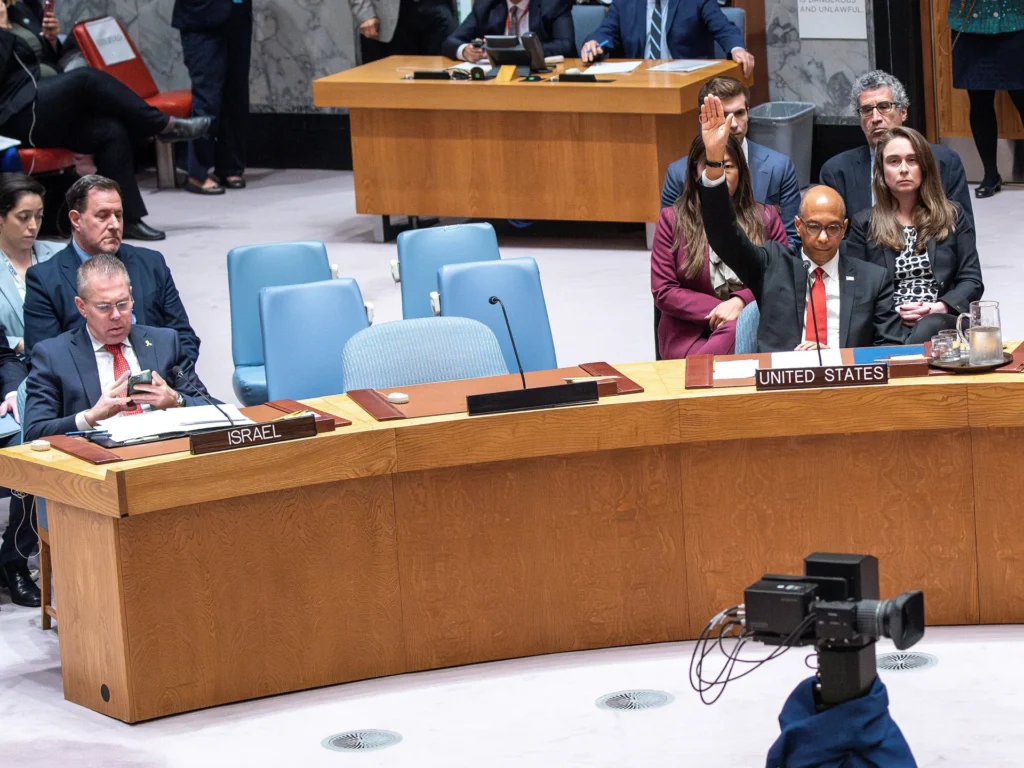
The US as “Backup”: Shielding the Perpetrator from Accountability
No police brutality persists without institutional support. In Floyd’s case, fellow officers stood by, and the system initially protected Chauvin. Scale this up, and the United States emerges as Israel’s unwavering “backup,” ensuring no one intervenes.
Diplomatically, the US wields its UN Security Council veto like a blue wall of silence, blocking condemnations, ceasefires, or investigations into war crimes. This prevents global bodies from holding Israel accountable, much like internal affairs dismissing complaints against cops.
Materially, billions in annual military aid from the US fund the very weapons and operations criticized as brutal. It’s the equivalent of supplying an officer with endless ammunition and armor, enabling escalation without restraint.
Politically and ideologically, the US frames Israel’s actions as “self-defense,” echoing justifications for police force like “officer safety.” This narrative dominates Western discourse, marginalizing Palestinian voices and legitimizing the violence.
It may be there is only a thin blue line between public safety and genocide.
Tuesday, September 23, 2025, 5:33:59 AM