

Internet chess did not fail because of malice, corruption, or even cheating in the ordinary sense. It failed because it was built on a logical contradiction so fundamental that no amount of policy refinement or technological enforcement could resolve it. The failure is structural, not moral.
1. The Medium Is the Problem
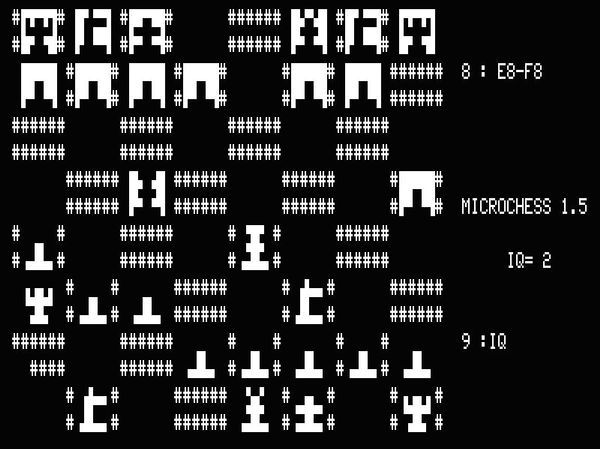
To play chess online, one must use a computer. This is not incidental; it is definitional. The computer is the board, the clock, the score sheet, the arbiter, the communications channel, and the venue. Every move, every interaction, every rule enforcement action passes through the machine. There is no “outside” of the computer in internet chess. The medium is total.
This already distinguishes online chess from over-the-board play, where the medium (a physical board) is passive and inert. Online, the medium is active, programmable, and multifunctional.
2. The Definitional Contradiction
Online platforms universally impose a rule that can be summarized as follows: you must use a computer to play, but you must not use a computer to assist your play.
This is not merely difficult to enforce; it is logically incoherent. The same object is simultaneously mandated and forbidden. The rule does not prohibit a specific action in a specific domain; it prohibits an abstract category—“computer assistance”—while requiring total immersion in that category.
In effect, the rule reads: use a computer, but do not use a computer. The distinction is not ontological but interpretive, and interpretation is precisely what computers are bad at when human intent is involved.
3. Technological Indistinguishability
The contradiction becomes fatal because of technological indistinguishability. The device that grants access to the game is the same device that can run engines, consult databases, receive advice from others, or automate analysis. These functions are not external add-ons; they are native capacities of the medium itself.
There is no clean boundary between “playing” and “assisting.” They occur in the same physical space, on the same hardware, often in the same operating system session. From the platform’s perspective, a move entered by a grandmaster after deep calculation and a move entered after engine consultation are identical artifacts: a timestamped coordinate pair sent from a client to a server.
The system cannot observe intent. It can only observe outputs.
4. The Enforcement Fallacy
To resolve this, platforms resort to enforcement by computation. Algorithms compare player moves against engine evaluations, track statistical deviations, model performance distributions, and infer likelihoods of assistance.
This creates a self-referential loop: computers are used to determine whether a human used a computer while using a computer. There is no independent, non-digital layer of judgment. No arbiter watches the player think. No physical separation exists between player and tool.
The system becomes circular. The same class of technology that is prohibited is also the sole means of detection. The prohibition is enforced by the very thing it claims to exclude.
5. The Inevitable Outcome
When a system cannot directly distinguish cause, it substitutes norms. Statistical baselines become proxies for legitimacy. Players are measured not against rules, but against models of expected behavior.
Those who conform pass unnoticed. Those who deviate attract scrutiny.
Exceptional performance is therefore not merely celebrated; it is suspect. Players who break the model—through originality, preparation, intuition, or rare cognitive strength—appear indistinguishable from cheaters at the level of statistical output. Lacking certainty, the system defaults to probability, reports, and risk management.
Removal follows not because guilt is proven, but because anomaly is inconvenient.
6. Conclusion
Online chess enforcement collapses because it confuses medium with agency and excellence with fraud. It treats the computer as both the neutral arena and the criminal instrument, then attempts to resolve the contradiction through automated suspicion.
The result is not justice, but administrative hygiene.
In short, internet chess platforms forbid computer assistance while requiring total reliance on computer assistance. This logical failure turns the medium itself into the alleged crime. Enforcement becomes digital circular reasoning, and the only coherent response is to recognize the contradiction, reject the premise, and walk away—without regret.